
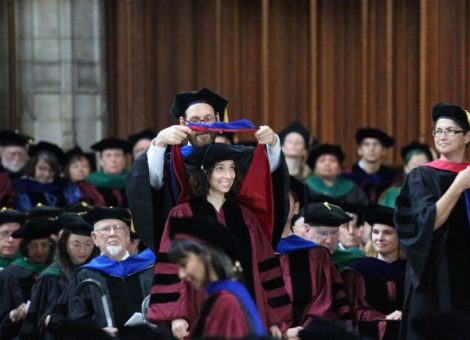
Margaret Distler is hooded and returns to medical school
Abraham Palmer participated in the graduation ceremony, while the rest of the lab and her family joined us for lunch afterwards.

Abraham Palmer participated in the graduation ceremony, while the rest of the lab and her family joined us for lunch afterwards.

Here is are some of the articles about Margaret’s paper:
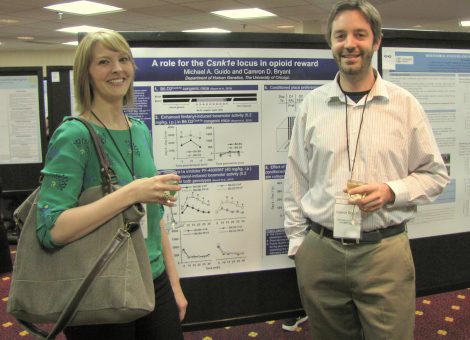
The Palmer lab was well represented at this meeting by Camron Bryant, Clarissa Parker, Amy Hart and Natalia Gonzales, all of whom won travel awards. Clarissa organized a symposium and gave a talk.
The article “”Congenic dissection of a major QTL for methamphetamine sensitivity implicates epistasis” has been accepted for publication in Genes, Brain & Behavior. Here is a link to the article. Co-authors include undergraduates Michael Guido and Loren Cole.
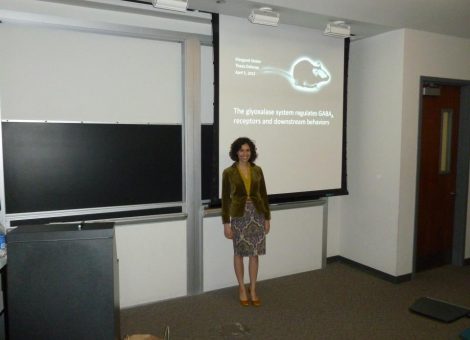
Margaret’s committee approved her thesis; her parents and future in-laws were in attendance!

The newest version 0.2-11 in now available on CRAN. This software is being used by numerous labs to address problems of relatedness, which can confound QTL mapping.
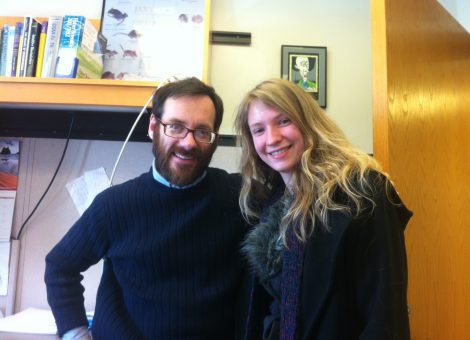
Kaitlin, who is now a graduate student in Mark Daly’s lab, was co-second author on one of the three Nature papers on sporadic cases of Autism that came out today.
Margaret’s paper, “Glyoxalase 1 increases anxiety by reducing GABAA receptor agonist,” has been accepted for publication in the Journal of Clinical Investigation. This paper had been under review at various journals for more than a year. It was finally accepted the day before Margaret defended her thesis! Congratulations, Margaret!

Results of the election were announced today, Abraham will become president-elect at the 2012 meeting in Boulder, and will then be president beginning at the 2013 meeting to be held in Leuven, Belgium. Finally, he will serve as past-president starting at the 2014 meeting. More information about IBANGS can be found here.
Dr. Abraham Palmer will serve as an external advisor to the NIAAA funded consortium entitled “Integrative Neurosciences Initiative on Alcoholism: Stress, Anxiety and Excessive Drinking”. Further information can be found on their website.