PalmerLab.org
  • Our Research
  • Members
  • Join the Lab
  • Photo Gallery
  • Press & Media
  • Protocols & Data
  • Blog
PalmerLab.org
  • Our Research
  • Members
  • Join the Lab
  • Photo Gallery
  • Press & Media
  • Protocols & Data
  • Blog

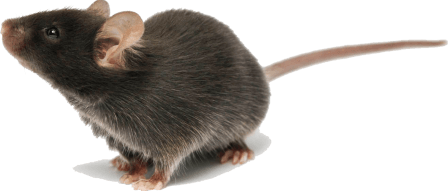
By identifying genes that influence behavior we hope to obtain fundamental mechanistic insights into the molecular basis of both health and disease. RELATIONSHIP BETWEEN GENES AND BEHAVIOR Learn more photo of a mouse

Recombination desert on HS rat Chromosome 13

High loadings in principal component analysis and unusual patterns of long-range linkage disequilibrium suggest that Chromosome 13 has a recombination desert, possibly due to an inversion on HS chr13. Large inversions prevent recombination between the inversion and non-inversion haplotypes (Li et al. 2023). We aim to find the location and cause of the recombination desert.

Read more
Faith Okamoto August 15, 2024 Internal Project Writeups

Converting GFF3 to refFlat

Regional association plots require the positions of genes to plot. We use the refFlat format, as required by LocusZoom. However, the Rat Genome Database (RGD) releases genome annotations in GFF3 format. Thus, we need to convert from one format to the other.

Read more
Faith Okamoto August 9, 2024 Internal Project Writeups

Detecting errors by using albinism

This project seeks to introduce and verify an “albinism QC”. Coat color is easy to phenotype and the genetic basis of albinism in rats is known. An albinism QC compares phenotyped coat color (albino vs. not albino) to genotyped albinism (homozygous recessive vs. others).

Read more
Faith Okamoto August 1, 2024 Internal Project Writeups

Should GWAS in HS rats use PCs as covariates?

Best practice in human GWAS is to include the top principal components (PCs) as covariates. This project evaluated the use of PCs as covariates in GWAS using HS rat data. Does using PC covariates have a significant and/or positive effect on GWAS results?

Read more
Faith Okamoto July 29, 2024 Internal Project Writeups

Where do HS rat genotypes have gaps?

It is of interest to know the locations and causes of HS rat genotype gaps. For example, little can be done to address a gap due to a lack of founder variation, but a gap due to poor genotyping may be amenable to improved genotyping methods. This project set out to discover gap locations in the context of minor allele frequency (MAF), both in founders and the modern population.

Read more
Faith Okamoto July 29, 2024 Internal Project Writeups

How does random tie-breaking during quantile normalization affect GWAS?

Ties are a problem for rank-based normalization. All samples must be assigned distinct ranks. Therefore, all ties must be broken in some way. Tie-breaking methods include the order samples appear, the alphanumerical order of sample identifiers, or randomly by a pre-determined seed number. We seek to determine the extent to which particular tie-break choices affect the GWAS results.

Read more
Faith Okamoto July 29, 2024 Internal Project Writeups

Manuscript accepted in Genes, Brain and Behavior

The manuscript titled ”Genome-wide association study of delay discounting in Heterogenous Stock rats” was accepted in Genes, Brain and Behavior.

Authors include current Palmer Lab members: Montana Lara, Apurva Chitre, Denghui Chen, Benjamin Johnson, Khai-Minh Nguyen, Sakina Muckadam, Thiago Sanches, Oksana Polesskaya, and Abraham Palmer.

Read more
Abraham Palmer July 18, 2024 Palmer Lab News, Publications

Nina Suzuki joins the Palmer Lab

Nina joined the Palmer Lab in July 2024 as a laboratory/animal assistant.

She graduated from UC Santa Barbara with a bachelor of science degree in Microbiology, and she plans to pursue graduate school.

Welcome, Nina!

Read more
Abraham Palmer July 12, 2024 Palmer Lab News
lab member photo

Michael Rempel joins the Palmer Lab

Michael Rempel joined the Palmer Lab in July 2024 for a five-week internship on the Wet Lab team. His work focuses on genotyping Cadm2 transgenic rats which were created as an animal model to study the effect of mutations on the recursive splice site in Cadm2, which is known to be strongly associated with ADHD in humans.

Michael is a high school student at SET High. He is interested in modern biotechnology, including computational biology. Outside of school, Michael spends time with friends, volunteers at concerts, and helps with native habitat restoration in Rose Canyon.

Welcome, Michael!

Read more
Abraham Palmer July 8, 2024 Palmer Lab News

Manuscript accepted in Alcohol: Clinical and Experimental Research

The manuscript titled ”Rare and Common Variants Associated with Alcohol Consumption Identify a Conserved Molecular Network” was accepted in Alcohol, Clinical and Experimental Research.

Authors include current Palmer Lab members: Brittany Leger and Abraham A Palmer.

Read more
Abraham Palmer June 10, 2024 Palmer Lab News, Publications
« FirstPrevious789101112131415NextLast »

« Previous Page — Next Page »

Related Websites:

Visit our project websites for more information:
  • RatGenes.org
    • RATTACA
    • GWAS datasets
  • RatGTEx.org | Expression data portal (gene expression, eQTL, sQTL)
  • POMS | opioidmedicationsurvey.org (Prescription Opioid Medication Survey study)
photo of Dr. Palmer

Abraham Palmer, PhD

Professor & Vice Chair for Basic Research,
Department of Psychiatry
University of California San Diego

Director,
NIDA Center of Excellence for Genetics, Genomics, and Epigenetics of Substance Use Disorders in Outbred Rats ________________________

Palmer Lab
University of California San Diego
Israni Biomedical Research Facility (BRF-2)
3147 Biomedical Sciences Way

La Jolla, CA 92093-0667
________________________

Email: aap@ucsd.edu
Phone: (858) 534-2093
Twitter: @AbePalmer

UCSD Profile
________________________

Curriculum Vitae

Abraham Palmer on:
PubMed
ORCiD: 0000-0003-3634-0747
Google Scholar: publications listing
________________________


PhD, Biomedical Sciences

University of California San Diego, 1999

BA, Biology
University of Chicago, 1992

On-campus Location

zxc

University of California San Diego
Israni Biomedical Research Facility
(also known as BRF-2 and IBRF)

3147 Biomedical Sciences Way
La Jolla, CA 92093

Mailing address:
University of California San Diego
Palmer Lab
9500 Gilman Drive
Mail Code: 0667
La Jolla, CA 92093-0667

Location information

Palmer Lab Members

Palmer Lab Members

BRF-2 | Floor 3-A: Dry Lab
Room 3A24: Abraham Palmer
Room 3A32: Oksana Polesskaya,
Thiago Sanches
3A07-D/E: Benjamin Johnson,
Zachary Tatom, Jonah Pacis
3A07-M: Apurva Chitre

BRF-2 | Floor 3: Wet Lab
Room 3217: Bays FF-JJ
  • Bay FF: Nina Suzuki
  • Bay GG: Montana Lara, Mohammad Sadegi
  • Bay HH: Denghui Chen, Gracie Ang
  • Bay II: Riyan Cheng, Rudy Avila
  • Bay JJ: Ivy Xi

  • For administrative and website support:
    April Jones (akjones@health.ucsd.edu)

    Photo Gallery

    News and Blog posts

    • Manuscript accepted in the American Journal of Human Genetics
    • Dr. Palmer gives talk at RSA in San Antonio, TX
    • Dr. Palmer gives talk at CPDD in Portland, OR
    • Montana Lara gives talk for Neuroscience at Nemours
    • Dr. Palmer presents at PEQG in Pacific Grove, CA
    • Pilot grant with Yale/NIDA Neuroproteomics Center awarded to Dr. Daniel Munro
    • Dr. Palmer presents at NIDA in Bethesda, MD
    • Manuscript published in Bioengineering
    © Copyright 2026 PalmerLab.org
    • Home
    • Our Research
    • Join the Lab
    • Press & Media
    • Protocols & Data
    • Internal Project Writeups